


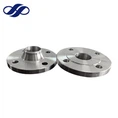

Flange related types
(1) Reducing flange
Product name: Reducing flange
Technical parameters: in accordance with national standards
Quality standards: strictly in accordance with the relevant national standards for production and manufacturing
Product specifications: DN15-DN2000
Product packaging: wooden boxes or other
Product color: metal color
Product features: anti-corrosion, acid and alkali resistance, long service life, etc., reasonable price calculation, smooth surface, acid and alkali resistance and high temperature resistance, beautiful appearance, strong textural performance.
Production process: professional overall forging, forging manufacturing, mid-plate cutting, mid-plate rolling, etc.
Processing method: high precision CNC lathe turning, ordinary lathe finishing turning, argon arc welding and other processing
Nominal pressure sch5s, sch10s, sch20s, sch30s, sch40s, etc.
Manufacturing standards: National standard, American standard, Russian standard, Japanese standard, etc.
Material: 201, 304, 316, 316L, 0Cr18Ni9, 321, 202, etc.
Application: Widely used in water conservancy, electric power, power station, pipeline fittings, industry, pressure vessels, etc.
Connection: flange nut, bolt connection.
(2) Stainless steel flanges
Name: stainless steel flange
Specifications:1/2″~240″(10-6000)
Pressure level: 0.6MPa ~ 32MPa, 150Lb ~ 2500Lb, PN0.25-PN42.0
Material: 304, 304L, 321, 316, 316L, 310S and other materials
Ministry of Chemical Industry standards: HG5010-52 ~ HG5028-58, HGJ44-91 ~ HGJ65-91, HG20592-2009 (PN series), HG20615-2009 (Calss series)
Application scope: boiler pressure vessel, petroleum, chemical, shipbuilding, pharmaceutical, metallurgy, machinery, food and other industries.
(3) Pressure vessel flange
Product name:Pressure vessel flange
Size:DN300~3000
Product Remarks: Pressure vessel flange application industry: HVAC electric power building water supply pressure vessel fittings, pressure pipe fittings.
Product category: Flange series
Application industry: HVAC electric power building water supply pressure vessel fittings, pressure piping fittings.
Application Technical Parameters
Seal Nominal pressure PN, MPa (bar) 0.6 1.0 1.6 2.5 4.0 6.4
Concave and convex surface (MFM) DN1300~3000 DN300~3000 DN400~2000 DN300~800
Tongue and groove surface (TG) DN1300~3000 DN300~3000 DN300~3000 DN300~800
Full plane (FF ) DN300~3000 DN300~3000 DN300~3000 DN300~3000 DN300~800
(4) Flat welding flange
Flat welding flange includes plate type flat welding flange, with neck flat welding flange.
Plate type flat welding flange (PL)
Flat welding flange is suitable for steel pipe connection with nominal pressure not exceeding 2.5MPa. The sealing surface of flat welding flange can be made into smooth, concave and tongue and groove type. Smooth flat welding flange has the largest application. Mostly used in the case of relatively mild media conditions, such as low-pressure non-purified compressed air, low-pressure circulating water.
With neck flat welding flange (SO)
Necked flat welding flange neck height is lower, the stiffness of the flange, load-bearing capacity has improved. Compared with butt welding flange, welding workload, high welding rod consumption, can not withstand high temperature and high pressure and repeated bending and temperature fluctuations, but the site installation is more convenient, can omit the process of welding seam shot rubbing, more popular.
(5) with neck butt welding (WN)
Butt welding flange: neck flange welding is usually called "high hub" flange. Its purpose is to transfer the pressure of the pipe, thus reducing the high stress concentration in the flange base. Neck flange welding is the best design for butt welding those flanges that are offered due to their inherent structural value. However, the price is higher due to the complexity of the production process of the product.
Threaded (threaded) flange: the threaded flange is connected with a wire buckle. However, the center of the product has a thread size corresponding to the pipe. Its main advantage is that it can be assembled without welding.
In addition, there are sliding flanges and lap flanges.
(6) Socket weld flange (SW)
Socket Welding Flange
Seal surface form: protruding surface (RF), concave and convex surface (MFM), tongue and groove surface (TG), ring joint surface (RJ)
Material: Carbon Steel: ASTM A105, 20#, Q235, 16Mn, ASTM A350 LF1, LF2 CL1/CL2, LF3 CL1/CL2, ASTM A694 F42, F46, F48, F50, F52, F56, F60, F65, F70.
Alloy Steel: ASTM A182 F1, F5a, F9, F11, F12, F22, F91, A182F12, A182F11, 16MnR, Cr5Mo, 12Cr1MoV, 15CrMo, 12Cr2Mo1, A335P22, St45.8/III, 35CrMoV, 45CrMo, etc. 45CrMo, etc.
Manufacturing standards: ANSI B16.5, GB/T9117.1-2000-GB/T9117.4-200, etc.
(7) Threaded flange (TH)
Threaded flange nominal diameter: DN8 ~ DN100 working pressure: 1.0 ~ 2.5 (MPa) plate threaded flange materials: stainless steel, carbon steel, alloy steel.
Threaded flange use: applicable to fire, gas, hot and cold water, air conditioning, air pressure pipe, oil pipe, instrumentation, hydraulic pipe and other industrial and civil pipe thread locking seal, etc.
Flange cover (BL)
Flange cover, also called blind flange, is a flange without hole in the middle for sealing pipe plug. There are more types of sealing surface forms, including flat, convex, concave and convex, tongue and groove, and ring joint surface.
Sealing surface: flat surface (FF), protruding surface (RF), concave and convex surface (MFM), tongue and groove surface (TG), ring joint surface (RJ)
Production materials.
Carbon Steel (Carbon Steel): ASTM A105,20#, Q235, 16Mn, ASTM A350 LF1,LF2 CL1/CL2,LF3 CL1/CL2, ASTM A694 F42,F46,F48,F50,F52,F56,F60,F65,F70.
Stainless Steel (Stainless Steel): ASTM A182 F304, 304L, F316, 316L, 1Cr18Ni9Ti, 0Cr18Ni9Ti, 321, 18-8.
Alloy Steel (Alloy Steel): ASTM A182 F1, F5a, F9, F11, F12, F22, F91, A182F12, A182F11, 16MnR, Cr5Mo, 12Cr1MoV, 15CrMo, 12Cr2Mo1, A335P22, St45.8/III.
(8) Loose set flange
Loose set flange with neck butt weld ring
Loose set flange butt weld ring loose set with neck flange, butt weld ring loose set plate flange, flat weld ring loose set plate flange, plate flip over loose set flange, in addition to meet the needs of the device after locking, there are holes in the rod, these holes can make the bolt by vibration does not come loose. Some flange bolts do not have threaded light rod to do fine, called thin rod flange bolts . This flange bolt is conducive to the coupling of variable forces. Steel structures have special high-strength bolts, the head will be made larger, the size also varies hot-dip galvanized round steel is to make the molten metal react with the iron matrix and produce an alloy layer.
Flat welded ring loose-fitting flange (PJ/SE)
Flat welded ring loose flange plate is movable flange piece, generally matching in the drainage fittings (expansion joints on the most common), manufacturers factory expansion joints on each end of a piece of flange, directly with the project pipeline, equipment with bolts. The purpose of using flat welding ring loose flange is generally to save material, its structure is divided into two parts, the pipe part of one end and pipe connection, one made into a flange, the flange part of the flange set on the flange. The flange is made of low-grade material, while the pipe part uses the same material as the pipe to achieve the purpose of saving material.
Flat welded ring loose flange.
1、Saving cost. When the pipe material is special and expensive, welding the flange of the same material is costly.
2, not easy to weld or not easy to process or the need for strength. Such as plastic pipe, glass fiber reinforced plastic pipe and so on.
3、Easy to construct. Such as connecting the flange bolt hole correspondence is not easy to find the right or to prevent future replacement of equipment flange bolt hole has changed.
Disadvantages of flat welded ring loose flange.
1, withstand low pressure.
2, welded ring at low strength (especially when the thickness of 3mm or less)
Flat welded ring loose set flange production standards.
National standard: GB/T9112-2000 (GB9113-1-2000 ~ GB9123?4-2000)
American Standard: ANSI B16.5 Class150, 300, 600, 900, 1500 (WN, SO, BL, TH, LJ, SW)
Japanese standard: JIS 5K, 10K, 16K, 20K (PL, SO, BL, WN, TH, SW)
German Standard: DIN 2573, 2572, 2631, 2576, 2632, 2633, 2543, 2634, 2545 (PL, SO, WN, BL, TH)
Chemical Ministry Standard: HG5010-52~HG5028-58, HGJ44-91~HGJ65-91
Flange standards: HG20592-2009 (PN series)\HG20615-2009 (Calss series)
Machinery Ministry standards: JB81-59~JB86-59, JB/T74-1994, JB/T79-94~JB/T86-94
Pressure vessel standards: NB/T47020-2012~NB/T47027-2012, JB1157-82~JB1160-82 B16.47A/B B16.39 B16.48
Ring groove surface flange and flange cover
Large diameter flat flanges
Large diameter high neck flange
Eight-letter blind plate
Butt welding ring loose flange 6
Swivel flange
Anchorage flange
Cladding/overlay welding flange
Marine lap-welded steel flange standard number: This standard applies to marine products, marine engineering products. The main materials are: carbon steel, alloy steel, low-temperature steel, stainless steel.
Forging flange connection is to put two pipes, fittings or equipment, and forging flange connection is an important connection method for pipeline construction. Forged flange connection is easy to use and can withstand greater pressure. In industrial pipelines, the use of forged flange connections is widespread. Within the home, the pipeline diameter is small and low pressure, and the flanged stamped elbow connection is not visible. If in a boiler room or production site, there are flange connections everywhere for pipes and equipment. Chromium content of 0.1% to 0.5% (forging flange generally does not contain chromium), carbon content of 1.0% or less and forging flange using high-temperature forging manufacturing, some forging flange surface hardness (HRC) although it can reach ≥ 56 above (quenching layer of only about 15 ㎜), because forging flange material hardenability is poor its heart hardness is generally only more than 30 degrees, under normal circumstances forging flange is often used Water quenching treatment.
Flange protection cover (flange protection joint)
Flange protection covers are mainly used for corrosion protection of flange connections in all industries. The flange protection head of this product is used to protect the flange face (convex or annular joint). Double ended studs and gaskets are protected from corrosion. The product is suitable for 316 ss stainless steel and non-metallic (plastic), it is manufactured in sizes from ½" to 144" ANSI, API and AWWA flange connection diameter. The flange head system combined with flange packing can protect in harsh application environments.
Flange seal cover construction.
316 stainless steel strip or nonmetallic strip
316 ss castings
316 ss worm gear clamps
Sealing groove neoprene layer (temperature. - 34.4°C to 82°C)
ECH rubber liner (temp. - 34.4°C to 149°C) Safety relief valve can release 5 psi
Advantages of MESCO flange packing covers: easy to install, no special tools required, easy to inspect, durable connection (not easily damaged), UV stabilized non-metallic material, reusable.
Flange packing system
Suitable for temperatures up to 80°C.
Flange packing is a unique solution for long-term corrosion problems.
Flange packing is a composite polar polymer-based coating. The paste form allows it to be applied without pretreatment. The viscoelastic formulation allows this material to flow into spacing and voids, producing a good seal that can resist corrosion.
Flange Packing Systems Flange packing saves time and money because of its ease of use. Provides long-term protection.
Performance: Bonded to steel, FBE (fusion epoxy powder), polyurethane, polyethylene Advanced resistance to weathering/salt from -51°C to 80°C Fills the entire void Removable/reusable flange surfaces without excessive pretreatment This ensures that the annular gap is completely filled before sealing with CZ-wrap tape.
E-2400/E2000 high temperature flange packing - suitable for temperatures up to 149°C.
E-2400/E2000 high temperature anti-corrosion flange packing is a product designed to protect flange connections from corrosion at temperatures up to 149°C.
E-2400/E2000 is a corrosion protection for steel flanges, bolts, pipes and structures with a gel in a non-electrolytic manner.
Nuts, bolts, and structures are tested with ASTM-B1117 salt spray test for 2000 hours. Bolt assemblies were tested for 2000 hours and the area protected with E2000/2400 could still be turned by hand. Proper use of E2000/2400 helps protect flange connections from corrosion.
(9) High temperature flange sealing
Components of high temperature flanges often require flat high temperature sealing. Without a good sealant additional sealing in separate pressure areas, affected by pressure, can cause inaccuracy or deformation in production, which means that leaks can occur under pressure in separate pressure areas, thus requiring unplanned repair. One of the better applications in the field of high temperature flat seals is Bokos high temperature sealant, which is specially formulated to remain inert in standard applications in steam and gas turbines and high temperature flanges, so it can withstand hot air, steam, water, light fuel oils and lubricants, and can resist crude oil and natural gas. It is a single component, paste sealant, industrial use, high quality sealing compound for service conditions where high temperature and pressure are required for smooth, flat sealing surfaces (butt joints). It is spread on dry surfaces using a mortar knife or rubber scraper. Since the sealing product does not cure, but its consistency changes slightly to maintain flexibility and elasticity, there is no time requirement in use and it can be put into operation immediately after application without waiting. If you need to repair scratched and damaged high temperature sealing surfaces, you should use it in combination with Bokose High Temperature F series repair products.
