


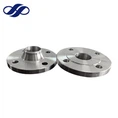


socket weld steel flange
ITEM | STANDARD |
STNDARD CODE | PRESSURE RATE | TYPE | SIZE |
1 | American standard | ANSI B16.5 | Class 150,300,600, 900,1500,2500 | WN, SW,SO,BL, TH,LWN | 1/2"-24" |
ANSI B16.36 | Class 150,300,600, 900,1500,2500 | WN, SO, TH | 1/2"-24" | ||
AWWA | Class B D E F | RING(HUB) flange | 3"-144" | ||
ASEM B16.47 | Class 150,300,600,900 | WN, BL | 26"-60" | ||
2 | British standard | BS4504 | PN6,10,16,25,40 | WN,SO,PL,BL | DN10-DN2000 |
3 | European standard | EN1092 | PN2,5,6,25,40,100, 160,250,320,400 | WN,SO,PL,BL | DN10-DN4000 |
4 | Japanese standard | JIS B2210 | 5K, 10K, 16K, 30K | SOP(PL,BL), SOH, (SO A,B,C), WN | 10A-1500A |
5 | Italy | UNI 6091-6099 UNI 2280-2286 UNI 2253-2257 | PN6,25,40,100, 160,250,320,400 | BL,WN,PL,SO | DN15-500 |
6 | Germany | DIN | PN2,5,6,10,16, 25,40,64,100,160 | SO,BL,PL,WN, LOOSE,TH | DN10-4000 |
1. Introduction to Socket Weld Steel Flange
Flanges are essential components of piping systems used to connect pipes, valves, pumps, and other equipment. A flange provides a reliable and secure joint that allows for easy maintenance and repair of the system. There are different types of flanges, including weld neck flanges, slip-on flanges, blind flanges, threaded flanges, and socket weld flanges.
2. What is a Socket Weld Steel Flange?
A socket weld steel flange is a type of flange that is welded onto the end of a pipe using a socket weld connection. The socket weld connection consists of a pipe end that is inserted into a recessed area of the flange. The flange is then welded onto the pipe using a fillet weld.
Socket weld steel flanges are available in different materials, such as carbon steel, stainless steel, and alloy steel. The flanges are designed to withstand high pressures and temperatures, making them suitable for use in demanding applications.
3. Types of Socket Weld Steel Flanges
There are different types of socket weld steel flanges, each with its own unique features and advantages. Here are some of the most common types:
Raised Face Socket Weld Flange
A raised face socket weld flange has a raised surface on the face of the flange. The raised face provides a surface for the gasket to seat against, creating a tight seal. This type of flange is commonly used in low-pressure applications.
Flat Face Socket Weld Flange
A flat face socket weld flange has a flat surface on the face of the flange. This type of flange is used in applications where the mating surfaces are not flat, such as cast iron or PVC pipes.
RTJ Socket Weld Flange
An RTJ socket weld flange has a raised ring on the face of the flange, which creates a tight.
Lap Joint Socket Weld Flange
A lap joint socket weld flange consists of two parts - the flange and the stub end. The stub end is welded onto the pipe, and the flange slides over the stub end and is secured in place with bolts. This type of flange is commonly used in systems that require frequent dismantling.
4. Advantages of Socket Weld Steel Flanges
There are several advantages to using socket weld steel flanges in high-pressure and high-temperature applications:
High Pressure and Temperature Resistance
Socket weld steel flanges are designed to withstand high pressures and temperatures, making them suitable for use in demanding applications. The socket weld connection provides a strong and leak-proof joint that can handle high pressure and temperature fluctuations.
Secure and Leak-Proof Connections
Socket weld flanges are welded onto the pipe, creating a secure and leak-proof joint. This type of connection is preferred in systems that require a high degree of reliability and safety.
Easy Installation and Maintenance
Socket weld steel flanges are relatively easy to install and maintain compared to other types of flanges. The socket weld connection eliminates the need for threading the pipe, making installation quicker and more straightforward.
5. Applications of Socket Weld Steel Flanges
Socket weld steel flanges are commonly used in several industries, including:
Oil and Gas Industry
The oil and gas industry often requires piping systems that can handle high pressures and temperatures. Socket weld steel flanges are used in pipelines, refineries, and offshore drilling platforms to ensure reliable and leak-proof connections.
Chemical Industry
The chemical industry also requires piping systems that can handle corrosive and hazardous materials. Socket weld steel flanges are used in chemical plants to transport chemicals and other substances safely and securely.
Power Plants
Power plants require piping systems that can handle high temperatures and pressures. Socket weld steel flanges are used in power plants to transport steam and other fluids, ensuring a reliable and efficient energy supply.
6. How to Install a Socket Weld Steel Flange?
Here are the steps to install a socket weld steel flange:
Cut the pipe to the desired length and clean the end.
Insert the pipe into the socket of the flange and align it.
Tack weld the flange to the pipe in several places.
Check the alignment and make any necessary adjustments.
Weld the flange to the pipe using a fillet weld.
7. Socket Weld Steel Flange vs. Slip-On Flange: What's the Difference?
The main difference between socket weld steel flanges and slip-on flanges is the method of attachment. Socket weld flanges are welded onto the pipe, while slip-on flanges are slid over the pipe and secured in place with bolts. Socket weld flanges are preferred in high-pressure and high-temperature applications, while slip-on flanges are used in low-pressure applications.
8. Common Problems with Socket Weld Steel Flanges
Socket weld steel flanges can experience several problems if not installed or maintained correctly:
Welding Defects
Socket welds can experience defects such as porosity, cracking, or incomplete fusion if the welding process is not performed correctly. These defects can compromise the integrity of the joint and lead to leaks or failure.
Corrosion
Socket weld steel flanges can corrode over time due to exposure to corrosive materials or environmental factors. Corrosion can weaken the flange and compromise its ability to handle high pressures and temperatures.
Improper Installation
Improper installation can lead to misalignment, poor fit-up, or inadequate welding, leading to leaks or failure. It's essential to follow proper installation procedures to ensure the integrity and reliability of the joint.
FAQs
Can socket weld steel flanges handle high-pressure applications?
Yes, socket weld steel flanges are designed to handle high-pressure and high-temperature applications.
How do you install a socket weld steel flange?
To install a socket weld steel flange, you need to insert the pipe into the socket of the flange, align it, tack weld it in several places, check the alignment, and weld it using a fillet weld.
What industries commonly use socket weld steel flanges?
Socket weld steel flanges are commonly used in the oil and gas industry, chemical industry, and power generation.
What are the advantages of using socket weld steel flanges?
Socket weld steel flanges provide a secure and leak-proof connection, are easy to install and maintain, and can withstand high pressures and temperatures.
What are the common problems with socket weld steel flanges?
The common problems with socket weld steel flanges include welding defects, corrosion, and improper installation.
Hot Tags: socket weld steel flange, China socket weld steel flange manufacturers, suppliers, factory, 150 Carbon Steel Flange, Screwed Flange, 600 CS FLANGE, Gost12820 80 Flange, 10 JIS SS41 LAP JOINT FLANGE, DN400 439 FLANGE


