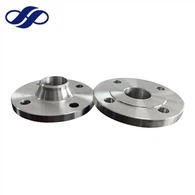




Pipe Fitting Tee:
Pipe fitting tee is a fitting that connects pipes at an angle of 90 degrees, to combine the flow of two lines or split the flow of one line.
Pipe Fitting Tee Product Description:
| 1 . Commodity: Concentric Reducer & Eccentric Reducer, Reducing Tee & Equal Tee, Elbow 45°, 90°, 180°, Cross, Cap, etc |
| 2 . Process Method: Cold Forming |
| 3 . Materials: Stainless Steel etc |
| 4 . Standards : ASME / ANSI B16.9 , B16.28 , ASTM A403 , DIN 2605 , DIN 2609 , DIN 2615 , etc |
| 5 . Size Range : |
| Seamless type: 1/2''-48'', DN15-DN50000 |
| Welded type: 1/2''-20'' DN15-DN1200 |
| 6 . Tolerances: according to the specification or customer's request and drawings |
| 7 . Applications: oil & gas industry, chemical industry, electric power, boiler and heat exchanger, machinery, metallurgy , sanitary construction etc. |
Pipe Fitting Tee Basic Information:
| Industry & Advantage | Application | a) Connect pipes |
| Advantage | a) High technology ; good surface ; high quality etc | |
| Terms & Conditions | Price Item | FOB , CFR , CIF or as negotiation |
| Payment | T / T , LC or as negotiation | |
| Delivery Time | 30 working days after received your deposit ( Normally according to the order quantity ) | |
| Package | Plywood case or as per customer's requirement | |
| Quality Requirement | Mill Test Certificate will be supplied with shipment , Third Part Inspection is acceptable | |
| Quality | Test | 100% PMI test ; Size test etc |
| Market | Main Market | Europe , Middle East , Southeast Asia , South America . Etc |
Pipe Fitting Tee ASTM A403 Standard Chemical Composition :
| Elements | WP304L(wt%) / CR304L / S30403 | 304(wt%) / CR304 / S30400 | 316L (wt%) / CR316L /S31603 | 316 (wt%) / CR316 / S31600 |
| (C) Carbon, max | 0.03 | 0.08 | 0.03 | 0.08 |
| (Mn) Manganese, max | 2 | 2 | 2 | 2 |
| (P) Phosphorus, max | 0.045 | 0.045 | 0.045 | 0.045 |
| (S) Sulfur, max | 0.03 | 0.03 | 0.03 | 0.03 |
| (Si) Silicon, max | 1 | 1 | 1 | 1 |
| (Ni) Nickel | 8.0 - 12.0 | 8.0 - 11.0 | 10.0 - 14.0 | 10.0 - 14.0 |
| (Cr) Chromium | 18.0 - 20.0 | 18.0 - 20.0 | 16.0 - 18.0 | 16.0 - 18.0 |
| (Mo) Molybdenum | N/A | N/A | 2.0 - 3.0 | 2.0 - 3.0 |
| (Fe) Iron | Bal. | Bal. | Bal. | Bal. |
| (Cu) Copper | N/A | N/A | N/A | N/A |
| (N) Nitrogen | N/A | N/A | N/A | N/A |
1. What are Butt Weld Steel Tee Fittings?
Butt weld steel tee fittings are pipe fittings used to join three pipes together. These fittings have a T-shaped configuration, with a straight section and two branching ends. The straight section of the fitting is typically the same size as the pipes being joined, while the branching ends can be of different sizes, depending on the application.
Butt weld steel tee fittings are called "butt weld" because they are welded to the pipes being joined. This creates a permanent and leak-proof joint that is ideal for high-pressure and high-temperature applications.
2. Types of Butt Weld Steel Tee Fittings
There are several types of butt weld steel tee fittings, including:
Straight Tee: This is the most common type of butt weld steel tee fitting. It has a straight section and two equal-sized branching ends.
Reducing Tee: This type of tee fitting has a straight section and two branching ends of different sizes. It is used to join pipes of different sizes.
Barred Tee: This type of tee fitting has a bar welded across the middle of the straight section, creating a barrier between the two branching ends. It is used to divert flow from one pipe to another.
3. Advantages of Butt Weld Steel Tee Fittings
Butt weld steel tee fittings have several advantages over other types of pipe fittings, including:
Durability: Butt weld steel tee fittings are incredibly durable and long-lasting. They can withstand high pressures and temperatures without cracking or leaking.
Leak-proof: The welded joint created by butt weld steel tee fittings is leak-proof, making it ideal for applications where leaks are not acceptable.
Strength: Butt weld steel tee fittings have a high strength-to-weight ratio, making them ideal for applications where weight is a concern.
Aesthetic appeal: Butt weld steel tee fittings have a sleek and modern appearance, making them ideal for applications where aesthetics are important.
4. Applications of Butt Weld Steel Tee Fittings
Butt weld steel tee fittings are used in a variety of applications, including:
Plumbing: Butt weld steel tee fittings are commonly used in plumbing systems to join pipes at a 90-degree angle.
HVAC: Butt weld steel tee fittings are used in heating, ventilation, and air conditioning systems to join ducts and pipes.
Oil and gas: Butt weld steel tee fittings are used in the oil and gas industry to join pipes in pipelines, refineries, and processing plants.
Chemical processing: Butt weld steel tee fittings are used in chemical processing plants to join pipes in chemical processing systems.
5. Factors to Consider when Choosing Butt Weld Steel Tee Fittings
When choosing butt weld steel tee fittings, there are several factors to
consider, including:
Material: Butt weld steel tee fittings are available in various materials, including carbon steel, stainless steel, and alloy steel. The material chosen should be appropriate for the application and environment in which the fitting will be used.
Size: Butt weld steel tee fittings are available in various sizes, ranging from ½ inch to 72 inches in diameter. The size chosen should be appropriate for the pipes being joined and the flow rate required.
Pressure rating: Butt weld steel tee fittings are rated for different pressure levels. The pressure rating should be appropriate for the application and the pressure of the fluid being transported.
Temperature rating: Butt weld steel tee fittings are rated for different temperature ranges. The temperature rating should be appropriate for the application and the temperature of the fluid being transported.
End connections: Butt weld steel tee fittings are available with different end connections, including flanged, threaded, and socket-welded. The end connection chosen should be appropriate for the pipes being joined and the application.
6. Installation of Butt Weld Steel Tee Fittings
Installing butt weld steel tee fittings requires a high level of skill and precision to ensure a leak-proof joint. The installation process involves the following steps:
Cut the pipes to the appropriate length and deburr the ends.
Clean the pipe ends and the fitting using a solvent or wire brush.
Align the pipes and fitting and tack weld them in place.
Check the alignment using a level or straightedge.
Complete the weld by filling in the gap between the pipe and fitting with weld metal.
Grind the weld smooth and inspect for defects.
7. Troubleshooting Common Problems with Butt Weld Steel Tee Fittings
Common problems with butt weld steel tee fittings include leaks, cracking, and corrosion. These problems can be caused by a variety of factors, including improper installation, exposure to corrosive environments, and fatigue from thermal cycling. Troubleshooting these problems typically involves inspecting the fitting for damage and determining the cause of the problem.
8. Maintenance of Butt Weld Steel Tee Fittings
Maintaining butt weld steel tee fittings involves inspecting them regularly for signs of damage or wear and addressing any issues promptly. Regular maintenance can help extend the life of the fittings and prevent costly repairs or replacements. Maintenance tasks may include cleaning the fittings, inspecting for corrosion, and repairing any leaks.
9. Safety Considerations when Working with Butt Weld Steel Tee Fittings
Working with butt weld steel tee fittings can be hazardous, and proper safety precautions should be taken to minimize the risk of injury. These precautions may include wearing protective clothing, such as gloves and eye protection, using proper welding techniques, and following all applicable safety guidelines and regulations.
10. Frequently Asked Questions
Can butt weld steel tee fittings be used in high-pressure applications?
Yes, butt weld steel tee fittings are designed to withstand high pressures and are commonly used in applications where high pressure is present.
Are butt weld steel tee fittings compatible with all types of pipes?
Butt weld steel tee fittings are compatible with most types of pipes, including carbon steel, stainless steel, and alloy steel.
Can butt weld steel tee fittings be used in corrosive environments?
Yes, butt weld steel tee fittings can be made from materials that are resistant to corrosion and are suitable for use in corrosive environments.
What is the maximum temperature that butt weld steel tee fittings can withstand?
The maximum temperature that butt weld steel tee fittings can withstand depends on the material and pressure rating of the fitting. It is important to choose a fitting that is rated for the temperature of the fluid being transported.
How do I choose the right size butt weld steel tee fitting for my application?
The right size butt weld steel tee fitting should be selected based on the diameter of the pipes being joined and the flow rate required for the application. Consult with a qualified engineer or supplier to ensure the correct size is selected.
Can butt weld steel tee fittings be reused?
In general, butt weld steel tee fittings are not designed to be reused once they have been installed. It is recommended to replace the fitting with a new one if it needs to be removed.
What is the difference between butt weld and socket weld tee fittings?
Butt weld tee fittings are welded directly onto the pipe, while socket weld tee fittings are inserted into the pipe and welded to the pipe's interior. Butt weld fittings are typically used for larger diameter pipes, while socket weld fittings are used for smaller diameter pipes.
Can butt weld steel tee fittings be used for both liquid and gas applications?
Yes, butt weld steel tee fittings can be used for both liquid and gas applications, as long as the appropriate material, pressure rating, and temperature rating are selected for the specific application.
Are there any special considerations for installing butt weld steel tee fittings in high-temperature applications?
When installing butt weld steel tee fittings in high-temperature applications, it is important to select a fitting with the appropriate temperature rating and to use proper welding techniques to prevent thermal fatigue.
Can butt weld steel tee fittings be used for underground piping systems?
Yes, butt weld steel tee fittings can be used for underground piping systems, as long as they are installed properly and appropriate materials are selected for the application.
Hot Tags: butt weld steel tee fitting, China butt weld steel tee fitting manufacturers, suppliers, factory, Manufacture B16 9 Elbow, Anchor Flange, DN50 904L FLANGE, 10 ELBOW, Q255 FLANGE, 900 DN50 321 FLANGE