




Hole processing method:
The processing method of prefabricated hole determines the edge condition of the hole. When the edge of the hole is free of burr, tear, hardened layer and other defects, the smaller the limit flanging coefficient is, which is conducive to flanging. At present, prefabricated holes are mainly processed by punching or drilling. The data shows that the min of drilling is smaller than that of general punching. The conventional punching method has high production efficiency and is especially suitable for machining large holes, but it will form defects such as hardened layer, burr and tear on the surface of the orifice, resulting in the increase of the limit flanging coefficient. Lower limit flanging coefficient can be obtained by means of heat treatment annealing after punching, hole repairing or turning the hole in the opposite direction to the punching direction to make the burr located inside the turning hole. The method of deburring after drilling can also obtain a lower limit flanging coefficient, but the production efficiency is lower
The smaller the relative diameter of the prefabricated hole, the smaller the limit flanging coefficient, which is conducive to flanging. This is because for the same prefabricated aperture, the greater the thickness of the material, the greater the allowable absolute value of the compressive stress in the thickness direction. According to the law of volume invariance, the limit tangential strain value when the edge of the deformation zone is about to crack during flanging increases. It can be seen that the limit flanging coefficient is smaller.
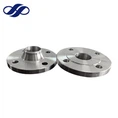
When it comes to piping systems, one essential component is the stub end, which is a piece of pipe that is welded to the end of the pipe, acting as a connector to another pipe or equipment. One popular material for making stub ends is carbon steel, as it offers several benefits, such as strength, durability, and corrosion resistance. Nest, we'll take a closer look at carbon steel stub ends, including their types, features, applications, and selection criteria.
Types and Features of Carbon Steel Stub Ends
Carbon steel stub ends come in various types and sizes, to match the specific requirements of different piping systems. The most common types of stub ends are:
- Long Pattern: These have a length that is similar to a standard pipe length and are used for standard flanges.
- Short Pattern: These stub ends are used with a lap-joint flange,
- Lap Joint: These stub ends rest inside the flange to allow for adjustment of the bolt holes.
Carbon steel stub ends may have different surface finishes, such as smooth, blasted, pickled, or coated with an anti-corrosion material. Additionally, carbon steel stub ends can come in different sizes to match the specific application requirements. The most common sizes are 2 to 48 inches in diameter, with a thickness of either a standard wall or a schedule 160 or 80 wall thickness.
Applications of Carbon Steel Stub Ends
Carbon steel stub ends can be found in numerous industries, including oil and gas, petrochemical, power generation, and water treatment facilities. These stub ends are typically used in piping systems where an easy way to disassemble and reassemble the pipeline is necessary, for instance where maintenance or modifications are frequently required. The main applications of carbon steel stub ends include:
- Connectors for pipeline systems, tanks, and vessels
- Joining flanges and fittings
- Bridging pieces between two different materials
- Adapting pipe sizes and systems
Carbon steel stub ends are popular in various applications due to their durability, strength, and ease of installation and replacement.
Standards for Carbon Steel Stub Ends
Carbon steel stub ends must meet safety standards, which include ASME B16.9, ASME B16.25, and ASTM A234 WPB. These standards ensure that the stub ends comply with specific dimensions, tolerances, markings, and testing requirements, which guarantee the safety and quality of the product. Additionally, stub ends should meet industry-specific standards, such as API, ISO, or DIN.
Selection Criteria for Carbon Steel Stub Ends
Choosing the right carbon steel stub ends for your piping system involves various considerations:
- Piping system design: The design of your piping system will depend on the application and temperature restrictions, so consider this when selecting your stub end.
- Piping material: The material of the stub end should match the pipes' material to maintain compatibility and avoid any corrosion issues. Carbon steel stub ends are typically used with carbon steel pipes.
- Stub end type: Select the stub end type that fits the flange, whether short pattern, long pattern, or lap joint. Each stub end type can be paired with a specific type of fitting.
- Dimensions: Ensure the stub end dimensions fit the piping system's design requirements.
- Pressure rating: The pressure rating of the stub end should match or exceed the maximum working pressure of the system it is installed in.
- Corrosion resistance: Carbon steel stub ends are prone to corrosion and should be protected with a coating, such as epoxy, galvanizing or painted.
Hot Tags: carbon steel stub end, China carbon steel stub end manufacturers, suppliers, factory, Seamless Pipe Cap, Seamless Steel Pipe Fittings, a420 gr wpl6, flange fittings, 1 1 4 INCH ASME B16 9 90 LONG RADIUS ELBOW, Threaded Flange


