


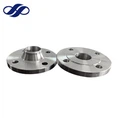

A flange is a type of mechanical component that is used to join pipes, valves, pumps, and other equipment in a piping system. A flange is a flat ring-shaped component that provides a connection between two pipes or between a pipe and another piece of equipment. It creates a seal between the two components to prevent leaks and also provides a surface for bolting the components together.
There are many different types of flanges that are used in various applications and industries, each with its own unique features and benefits. Some of the most common types of flanges include:
1.Weld Neck Flanges: Weld neck flanges are used in high-pressure piping systems and are characterized by their long neck that is welded to the pipe. The long neck provides additional strength and stability to the connection, making it ideal for use in high-pressure applications.
2.Slip-on Flanges: Slip-on flanges are similar to weld neck flanges but have a shorter neck that is not welded to the pipe. Instead, the flange is slipped over the pipe and then bolted to the other component. Slip-on flanges are easy to install and are used in a wide range of applications, including low-pressure piping systems.
3.Threaded Flanges: Threaded flanges are used in low-pressure piping systems and are characterized by a threaded inner surface that allows the flange to be threaded onto a pipe or other component. Threaded flanges are easy to install and are often used in smaller-diameter piping systems.
4.Lap Joint Flanges: Lap joint flanges are similar to slip-on flanges but have a raised face that allows a stub end to be inserted into the flange. The stub end is then welded to the pipe, creating a secure connection. Lap joint flanges are often used in low-pressure piping systems and are easy to install.
5.Blind Flanges: Blind flanges are used to close off the end of a pipe or other component. They have a raised face that provides a surface for bolting the flange to another component, but no bore, allowing the pipe to be closed off. Blind flanges are used in a variety of applications, including in pipelines, pressure vessels, and heat exchangers.
6.Orifice Flanges: Orifice flanges are used to measure the flow of fluid in a piping system. They have a drilled hole in the center that allows fluid to flow through, and the flow rate can be measured using specialized equipment. Orifice flanges are used in a variety of applications, including in the oil and gas industry and in power plants.
In conclusion, flanges are an essential component in piping systems, and there are many different types of flanges that are used in various applications and industries. Each type of flange has its own unique features and benefits, and it is important to choose the right type of flange for your specific application to ensure the safety and reliability of your piping system.
