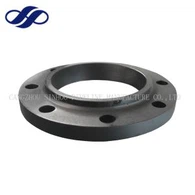


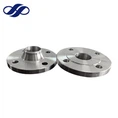


| flange and pipe fittings |
Product introduction

| Steel Flanges | ||
| Material | Carbon steel | ASTM A105. ASTM A350 LF1. LF2, CL1/CL2, A234, S235JRG2, P245GH |
| P250GH, P280GHM 16MN, 20MN ,20# | ||
| Stainless steel | ASTM A182, F304/304L, F316/316L | |
| Alloy steel | ASTM A182 A182 F12,F11,F22,F5,F9,F91etc. | |
| Standard | ANSI | Class 150 Flanges-Class 2500 Flanges |
| DIN | 6Bar 10Bar 16Bar 25Bar 40Bar | |
| JIS | 5K Flanges-20K Flanges | |
| UNI | 6Bar 10Bar 16Bar 25Bar 40Bar | |
| EN | 6Bar 10Bar 16Bar 25Bar 40Bar | |
| TYPE | 1.Welding neck Flange 2.Slip on | |
| 3.Blind flange 4.Long welding neck flange | ||
| 5.Lap joint flange 6.Socket welding | ||
| 7.Threaded flange 8.Flat flange | ||
| Surface | Anti-rust oil, clear lacquer, Black lacquer, Yellow lacquer,hot-dipped Galvanized,electrical galvanized | |
| Connection | Welding, Threaded | |
| Technical | Forged, Casting | |
| Size | DN10-DN3600 | |
| Package | 1.>Standard export packaging (Plywood Case Of Outside,Plastic Cloth Of Inside). 2:As Customers' Requirements | |
| Heat Treatment | Normalizing, Annealing, Quenching Tempering | |
| Certificate | ISO9001 | |
| Applications | Water works, Shipbuilding industry, Petrochemical & Gas industry, Power industry, Valve industry,and general pipes connecting projects etc. | |
What are Flanges?
A flange is a flat, circular component with evenly spaced holes that is used to join two pipes or connect a pipe to a pressure vessel or pump. Flanges are essential in creating a leak-proof joint between two pipes, allowing for easy disassembly and maintenance of the system. Flanges come in various sizes, shapes, and materials, depending on their application.
Types of Flanges
There are several types of flanges available in the market, including:
Weld Neck Flanges
Slip-On Flanges
Blind Flanges
Socket Weld Flanges
Threaded Flanges
Lap Joint Flanges
Each type of flange is designed for specific applications and is available in various sizes and materials.
Flange Materials
Flanges can be made from a wide range of materials, including:
Carbon Steel
Stainless Steel
Alloy Steel
Brass
Bronze
Plastic
Rubber
The choice of material depends on the application, temperature, pressure, and fluid or gas being transported.
Flange Applications
Flanges are commonly used in various industries, including:
Oil and Gas
Chemical and Petrochemical
Power Generation
Water and Wastewater
Pharmaceutical
Food and Beverage
What are Pipe Fittings?
Pipe fittings are components used to join, divert, or regulate the flow of fluids or gases in a system. They come in various sizes, shapes, and materials, and can be threaded or welded to pipes. Pipe fittings are essential in creating a leak-proof and efficient system and can withstand high temperatures and pressures.
Types of Pipe Fittings
There are several types of pipe fittings available in the market, including:
Elbows
Tees
Reducers
Couplings
Caps
Adapters
Unions
Each type of fitting is designed for specific applications, and their size and material depend on the system's requirements.
Pipe Fitting Materials
Pipe fittings can be made from various materials, including:
Carbon Steel
Stainless Steel
Alloy Steel
Copper
PVC
CPVC
PEX
The choice of material depends on the system's application, temperature, pressure, and fluid or gas being transported.
Pipe Fitting Applications
Pipe fittings are commonly used in various industries, including:
Plumbing
HVAC
Water Treatment
Chemical Processing
Food and Beverage
Pharmaceuticals
Flange vs. Pipe Fitting
Flanges and pipe fittings are both essential components in any fluid or gas system, but they serve different purposes. A flange is used to connect two pipes or a pipe to a pressure vessel, whereas a pipe fitting is used to join, divert, or regulate the flow of fluids or gases. Flanges are used where easy access is required for inspection or maintenance, whereas pipe fittings are used to create complex systems that can withstand high temperatures and pressures.
Differences between Flanges and Pipe Fittings
The main differences between flanges and pipe fittings are:
Flanges are used to connect two pipes or a pipe to a pressure vessel, whereas pipe fittings are used to join, divert, or regulate the flow of fluids or gases.
Flanges are easy to disassemble for inspection or maintenance, whereas pipe fittings are not.
Flanges come in various types and materials, whereas pipe fittings come in various types, sizes, and materials.
Benefits of Flanges and Pipe Fittings
Flanges and pipe fittings offer several benefits, including:
Efficiency
Flanges and pipe fittings allow for easy assembly and disassembly of a system, making maintenance and inspection more accessible. They also provide a leak-proof joint that prevents any fluid or gas from escaping the system.
Versatility
Flanges and pipe fittings come in various types, sizes, and materials, making them suitable for various applications and industries.
Durability
Flanges and pipe fittings are made from materials that can withstand high temperatures and pressures, making them ideal for harsh environments and demanding applications.
Cost-Effective
Flanges and pipe fittings are cost-effective solutions that offer long-term benefits, such as increased efficiency and reduced maintenance costs.
Common Problems with Flanges and Pipe Fittings
Despite their many benefits, flanges and pipe fittings can develop problems that can affect the system's performance. The most common problems include:
Leakage
Leakage is a common problem with flanges and pipe fittings and can occur due to improper assembly or corrosion.
Corrosion
Corrosion is a common problem in systems that handle fluids or gases, and it can weaken the flanges and pipe fittings over time, leading to failure.
Improper Assembly
Improper assembly of flanges and pipe fittings can lead to leaks, which can compromise the system's performance.
Hot Tags: flange and pipe fittings, China flange and pipe fittings manufacturers, suppliers, factory, 150 DN50 904L FLANGE, 150 DN20 904L FLANGE, DN50 439 FLANGE, Male And Female Flange, Raised Face Flange, DN400 420J2 FLANGE